Solar generators ranked by price per watt-hour ($/Wh) — the only metric that reveals true value. All units are compatible with solar panel charging. Updated 2026-04-05.
| # | Solar Generator | $/Wh | Price | Capacity | |
|---|---|---|---|---|---|
| 1 |
LiFePO4 · 1152Wh |
$0.2734/Wh | $315.0 | 1152Wh | Buy → |
| 2 |
· 999Wh |
$0.2803/Wh | $279.99 | 999Wh | Buy → |
| 3 |
LiFePO4 · 3840Wh |
$0.281/Wh | $1079.1 | 3840Wh | Buy → |
| 4 |
· 3000Wh |
$0.2997/Wh | $899.0 | 3000Wh | Buy → |
| 5 |
LiFePO4 · 1536Wh |
$0.3053/Wh | $469.0 | 1536Wh | Buy → |
| 6 |
LiFePO4 · 2048Wh |
$0.3071/Wh | $629.0 | 2048Wh | Buy → |
| 7 |
LiFePO4 · 1920Wh |
$0.312/Wh | $599.0 | 1920Wh | Buy → |
| 8 |
LiFePO4 · 2232Wh |
$0.3132/Wh | $699.0 | 2232Wh | Buy → |
| 9 |
LiFePO4 · 1070Wh |
$0.3262/Wh | $349.0 | 1070Wh | Buy → |
| 10 |
LiFePO4 · 576Wh |
$0.3281/Wh | $189.0 | 576Wh | Buy → |
| 11 |
LiFePO4 · 3600Wh |
$0.3331/Wh | $1199.0 | 3600Wh | Buy → |
| 12 |
LiFePO4 · 12000Wh |
$0.3333/Wh | $3999.0 | 12000Wh | Buy → |
| 13 |
LiFePO4 · 1024Wh |
$0.3604/Wh | $369.0 | 1024Wh | Buy → |
| 14 |
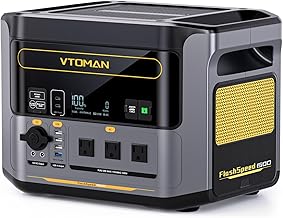
LiFePO4 · 1548Wh |
$0.3682/Wh | $569.99 | 1548Wh | Buy → |
| 15 |
LiFePO4 · 1548Wh |
$0.3682/Wh | $569.99 | 1548Wh | Buy → |
| 16 |
LiFePO4 · 1920Wh |
$0.3693/Wh | $709.0 | 1920Wh | Buy → |
| 17 |
· 999Wh |
$0.3704/Wh | $369.99 | 999Wh | Buy → |
| 18 |
· 999Wh |
$0.3704/Wh | $369.99 | 999Wh | Buy → |
| 19 |
LiFePO4 · 2048Wh |
$0.3706/Wh | $759.0 | 2048Wh | Buy → |
| 20 |
LiFePO4 · 2016Wh |
$0.3766/Wh | $759.18 | 2016Wh | Buy → |
The terms are often used interchangeably. Technically, a solar generator is a portable power station that is specifically marketed or bundled with solar panels for charging. All modern portable power stations support solar charging via their solar input port — so any power station with a solar input is effectively a solar generator.
When comparing solar generators, $/Wh is the most important metric for the battery unit itself. Solar panel compatibility (max solar input in watts) is the second key spec — higher solar input means faster recharging from panels.
Higher = faster solar charging. 200W input + 200W panel = ~1 hour per 200Wh in full sun.
Bigger = longer runtime. The main driver of $/Wh — larger stations almost always cost less per Wh.
Maximum Power Point Tracking optimizes solar charging efficiency. Most 2025-2026 models include MPPT.
Some models (EcoFlow, Anker) support expansion batteries to double or triple capacity without buying a new unit.
Rule of thumb: Panel wattage = Station Wh / Hours of peak sun / 0.8 (80% efficiency)
Example: 1,000Wh station, 5 hours peak sun: 1,000 / 5 / 0.8 = 250W of panels to recharge in one day.
Most stations charge safely with panels rated up to their max solar input. Check your station's max solar input before buying panels to avoid overspeccing.